
Criminal Court Cases in Peach County
Peach County is part of the Houston Judicial Circuit. Superior Court hears felony prosecutions, and the Superior Court clerk also serves Juvenile Court. The clerk at 205 West Church Street in Fort Valley is the custodian for felony pleadings, docket entries, orders, dispositions, and sentences. Juvenile files follow separate confidentiality rules and should not be treated as open adult criminal dockets.
Jurisdiction is divided below that level. Probate Court hears county misdemeanor traffic, game-and-fish, and some drug matters. Magistrate Court issues arrest and search warrants, conducts first appearances and preliminary proceedings, and hears some minor or ordinance matters. Fort Valley and Byron municipal courts retain their own city dockets. The correct court depends on the filed charge, not merely the agency that made the arrest.
Peach County Felony File Custodian
The Superior Court clerk is the authoritative source for Peach County felony case files. Call 478-825-5331 when a PeachCourt result is absent, incomplete, or unclear. A useful request names the defendant, gives the date of birth when known, supplies the case number or approximate filing year, and identifies the exact document sought. Ask for the docket first. It serves as an index to later requests for an accusation, indictment, plea, order, disposition, or sentencing record.
The county explains how open-records matters are routed through the Peach County open-records page. That page is a sound starting point for county administration records, but it also warns that separate elected offices keep their own material. Judicial records must go to the court clerk, not the Board clerk.
The county routing page helps prevent a request from being sent to an office that does not hold the criminal docket.
Peach County Case Record Searches
No single free statewide search contains every Peach County trial-court criminal case. PeachCourt may provide Superior Court access, but its account, county coverage, and document access vary. Use it as a lead and confirm the file with the clerk.
- Choose Superior, Probate, Magistrate, Fort Valley Municipal, or Byron Municipal Court from the filed offense and location.
- Search PeachCourt where Superior Court coverage is available, using the full name and case number if known.
- Call or visit the proper clerk when the online result is missing or when a municipal or limited-jurisdiction file is involved.
- Request the docket, then name the pleadings, orders, disposition, or sentence needed.
- Ask whether a certified copy is required and confirm the current copy charge before ordering.
The PeachCourt platform is not a substitute for clerk confirmation. Magistrate Court's advertised public search emphasizes civil, dispossessory, foreclosure, and county ordinance records, so it should not be assumed to cover every criminal matter.
| Search or request field | How it helps |
|---|---|
| Full defendant name | Primary name locator |
| Date of birth | Separates people with similar names |
| Case or citation number | Strongest exact locator |
| Court | Routes the request to the right custodian |
| Approximate year | Narrows a manual docket search |
| Document requested | Defines the copy the clerk should produce |
PeachCourt Coverage Has Limits
A missing online hit does not prove that no Peach County criminal case exists. A city citation may remain in municipal court. A felony may be indexed under a case number not known to the reader. A new filing may not yet be visible, and a restricted or sealed item may be withheld. Search spelling variants, reduce the name fields, and then contact the clerk.
Georgia's official legislation database provides the current text behind jurisdiction and access rules. The Georgia General Assembly legislation service is useful when a docket cites a statute without explaining it.
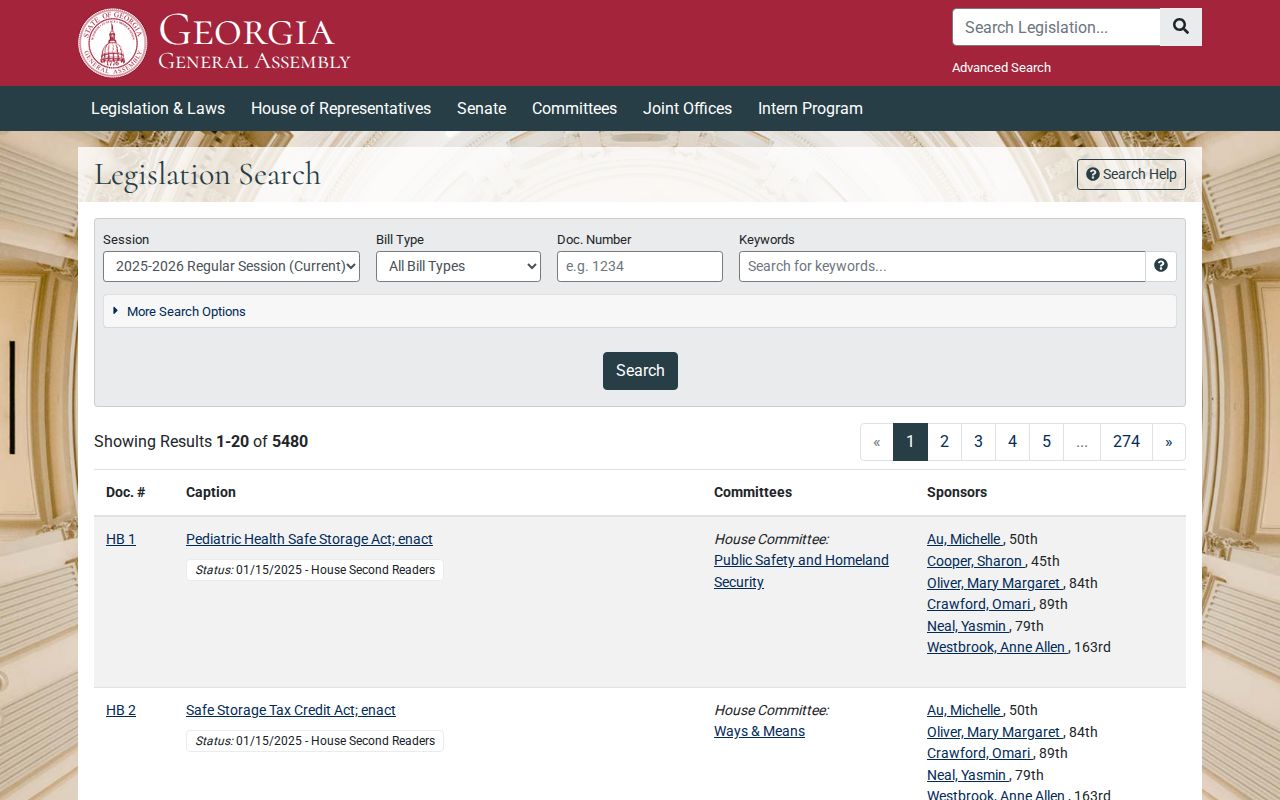
The legislation service lets a reader compare the code reference in a Peach County filing with the state's official source.
What a Criminal Case File Contains
A Peach County case file records what the prosecutor pursued and how the court handled it. It may differ sharply from the jail record. An arrest can list several initial charges, while the accusation or indictment may select different offenses. Read the docket and final judgment together.
| Case number | The court's identifier for the prosecution |
|---|---|
| Charging document | Accusation, indictment, citation, or other filed charge |
| Docket entries | Filed motions, notices, hearings, and orders |
| Plea | Recorded response to the filed charge |
| Hearing dates | Scheduled or completed court events |
| Disposition | Dismissal, plea, verdict, or other final outcome |
| Sentence | Custody, supervision, fine, or other ordered terms |
Identity data in a broader GCIC history can include name, date of birth, physical traits, arrest agency, charges, disposition, and correctional custody. The court file is the source to verify the judicial outcome.
Peach County Municipal Transfers
Fort Valley Municipal Court accepts document requests in person, by mail, or by email at municipalcourt@fortvalleyga.org. Its instructions ask for a full name, date of birth, mailing address, telephone number, and case number if possible. The court is nonjury. A defendant facing a qualifying state misdemeanor may demand a jury trial, which causes the case to move to a county trial court. That transfer can explain why one clerk has only the early city record.
Fort Valley also cautions that a new citation may need ten business days before payment access appears. Paying a citation acts as a guilty plea, while a nolo plea requires an appearance. Byron's nCourt page is a payment tool, not a complete criminal case search. Obtain Byron case documents from the municipal clerk at 478-956-2757 or the Municipal Complex at 478-956-3600.
Criminal Case Stages in Peach County
The court file grows after the prosecutor files charges. Arraignment records the plea. Pretrial entries may include motions, notices, discovery disputes, and calendar settings. A plea or trial resolves the disputed charge, and the disposition states the result. If guilt is established, the sentence sets the court-ordered terms.
Case flow: Charges Filed › Arraignment › Pretrial › Plea or Trial › Disposition › Sentencing
Magistrate warrant and first-appearance papers may precede the Superior Court file. An arrest alone is not the start of a conviction record. For the custody event and initial jail charges, use the Peach County arrest search; for the filed prosecution, rely on the court docket.
Peach County Federal Case Boundary
A federal offense arising in Peach County does not belong in the county Superior Court file. Peach County lies within the U.S. District Court for the Middle District of Georgia. The federal clerk controls filed federal cases, and PACER supplies registered docket access.
The Middle District of Georgia court site identifies the federal court and its official services.
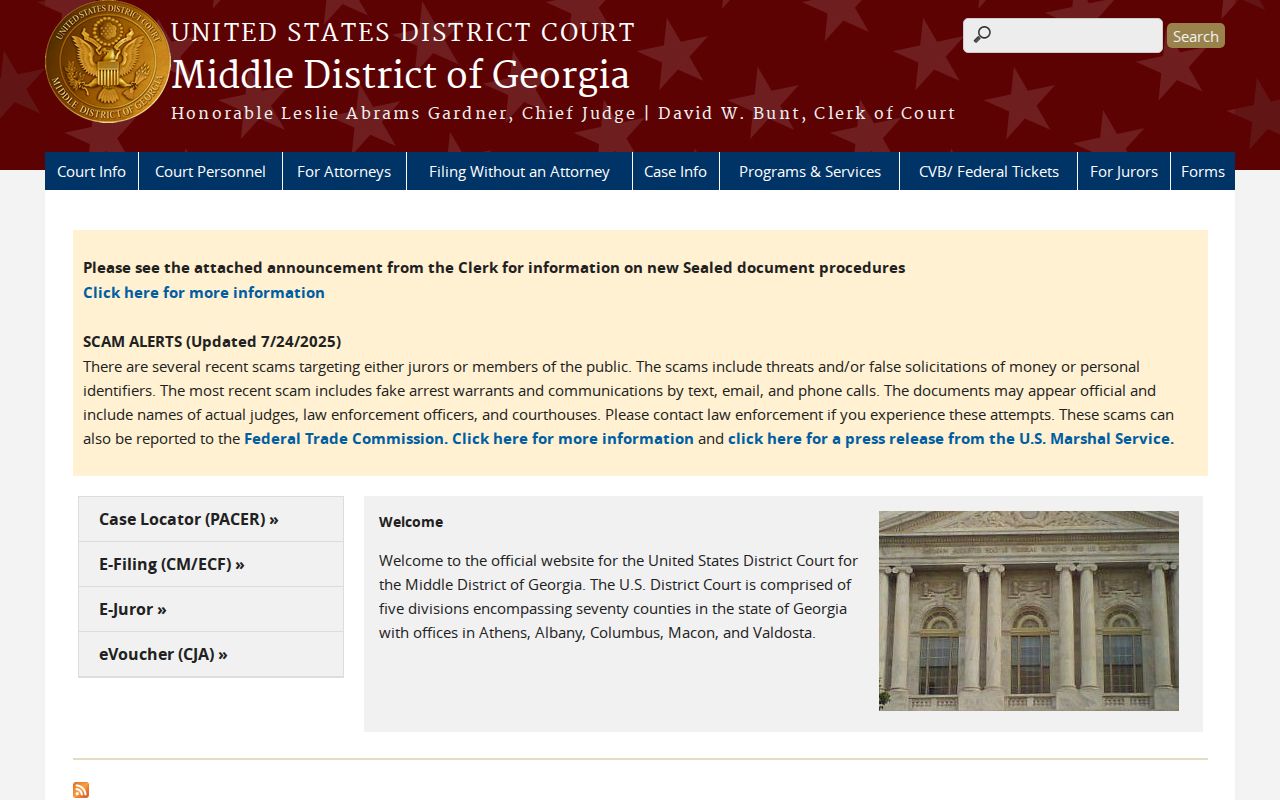
This federal source marks the boundary between a Peach County prosecution and a federal case.
For docket documents, consult the PACER service and verify its current fee schedule before use.
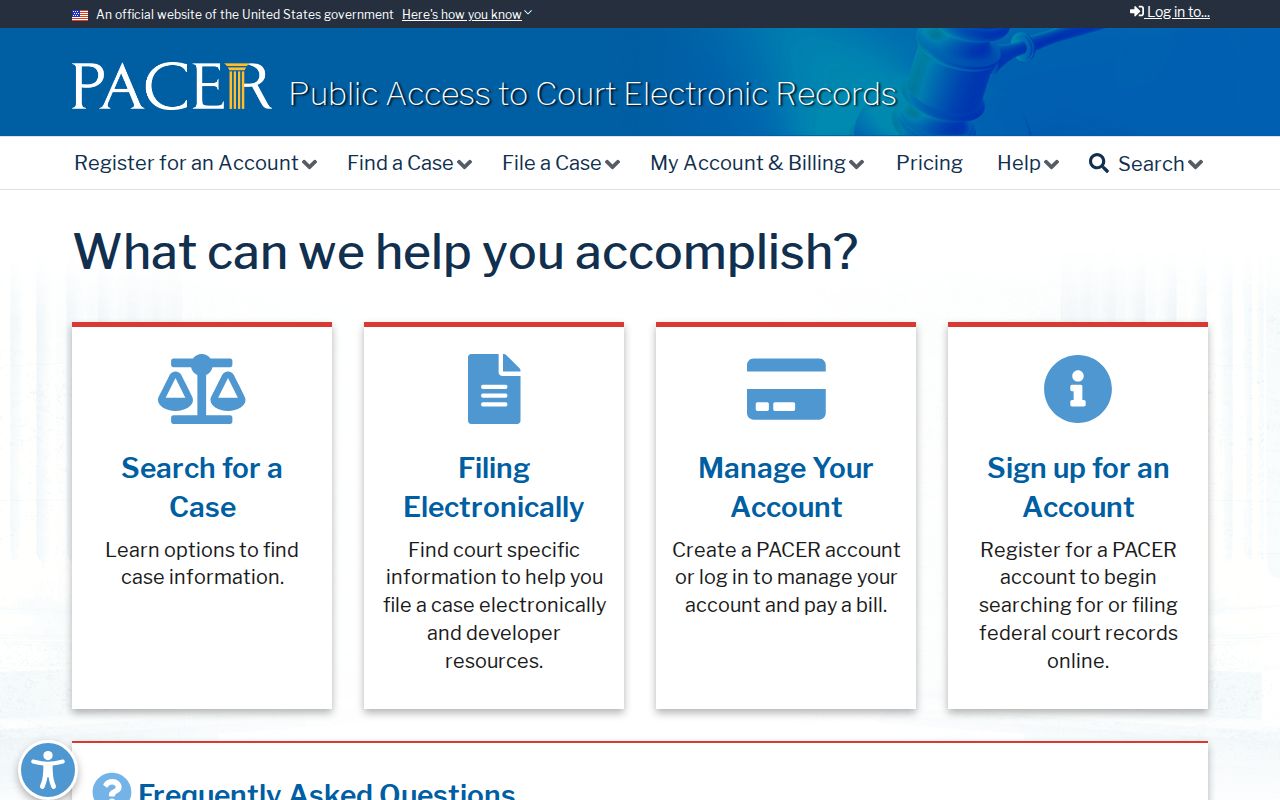
PACER covers federal dockets, not Peach County Superior, Probate, Magistrate, or municipal files.
A later federal sentence may lead to federal custody. The Federal Bureau of Prisons locator searches custody records rather than court pleadings.
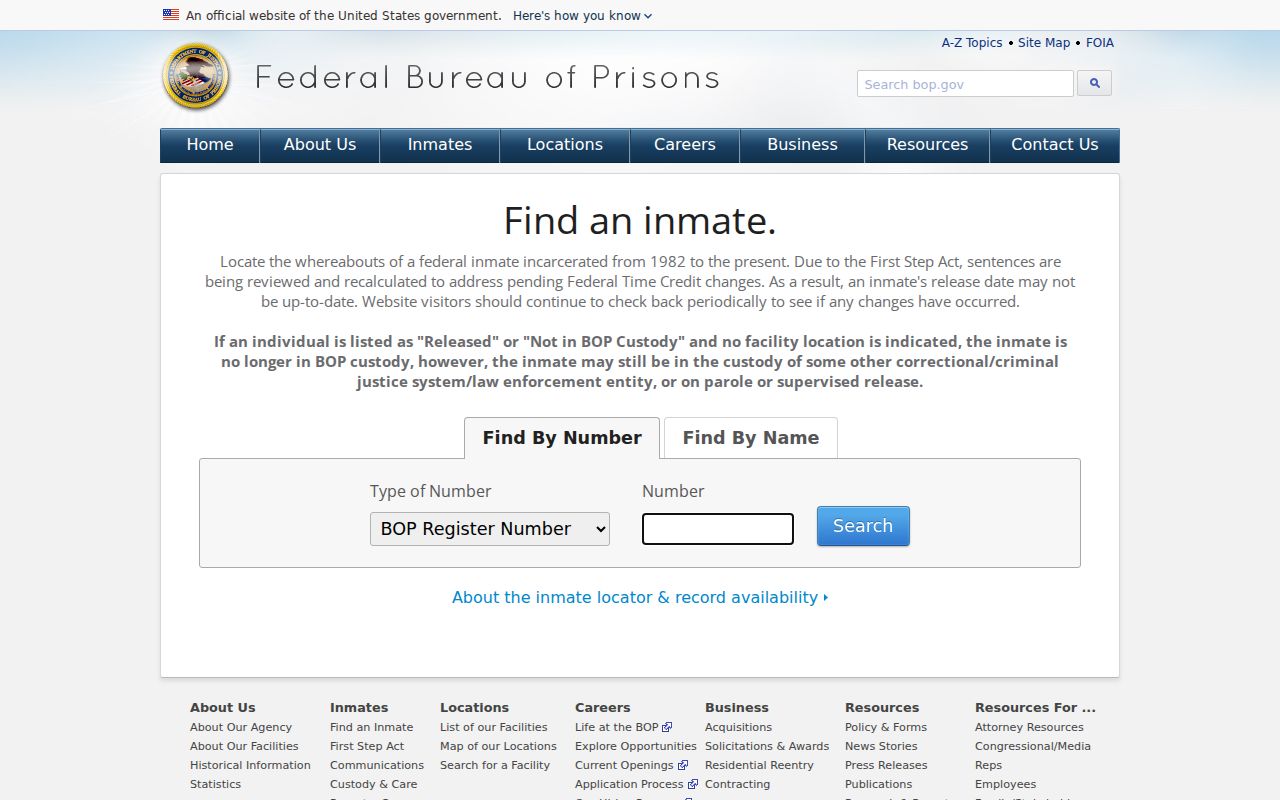
The locator can confirm federal custody, while the federal docket remains the source for charges and judgment.
Access Rules for Peach County Cases
Georgia court records are generally open, but access can be limited by statute or court order. Juvenile material receives special protection under O.C.G.A. § 15-11-700 and following sections. Sealed records, protected victim data, confidential identifiers, and material tied to an active sealed warrant may be removed or withheld. Online views may also show less than the courthouse file.
The Georgia Open Records Act sets public access policy in O.C.G.A. §§ 50-18-70 through 50-18-77, yet requests still must reach the actual custodian. Ask for nonexempt portions when part of a record is withheld and request the statutory basis for a denial. The Georgia Attorney General's open-government resources explain the state's access framework.
The state guidance supports a focused request, while the Peach County court clerk remains the office that produces the judicial file.
Certified Peach County Dispositions
A screen result may be enough to locate a case, but it is not the same as a certified disposition. Ask the Peach County clerk for the final disposition or judgment and specify certification when an official copy is needed. Include the court, case number, defendant name, and approximate year. If the arrest appears in a GCIC history without its outcome, a certified court disposition can support correction through the agency process described by GBI.
Check the document itself for the count, final charge, plea or verdict, disposition date, and sentence. A docket entry may abbreviate the event, while the signed judgment gives the court's operative terms. When several counts appear, match each count to its own result. Do not assume that one dismissal resolves every charge in the case.
Older files may require a manual clerk search. Give a name variant and a narrow year range, then ask whether the index points to paper, scanned, or electronic material. If the clerk cannot find the case, verify that it did not begin in a municipal court or transfer from another court under a different number.
Note: Record restriction can limit GCIC dissemination without sealing the matching Peach County court file.